Most professionals think about their careers as something that “just happens.” You go to school, get a job, move up a ladder, maybe change companies, and hope the years of experience will naturally translate into success.
But what if we flipped the script?
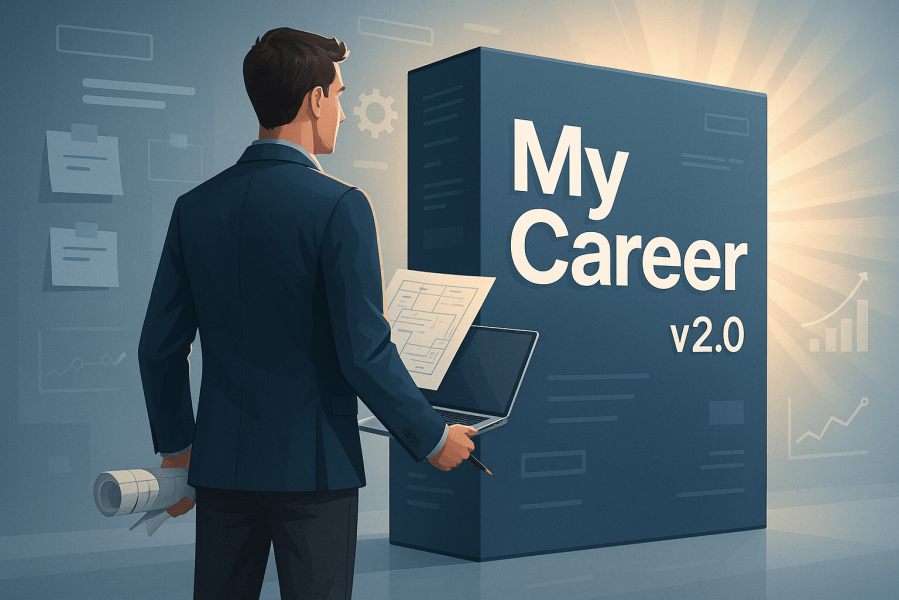
What if, instead of treating your career as a passive timeline, you started managing it as if it were a product?
Think about it: great products don’t just stumble into success. They’re designed, tested, iterated, improved, and strategically positioned in the market. They have roadmaps, features, branding, and long-term visions.
And so should your career.
Why Thinking of Your Career as a Product Changes Everything
When you manage your career like a product, you stop seeing yourself as “an employee” and start seeing yourself as a creator, designer, and owner of your professional path.
- You start asking: Who is my target audience? (employers, clients, industry peers).
- You start defining: What is my unique value proposition?
- You build a roadmap instead of drifting.
- You focus on features that matter (skills, experiences, reputation).
- You pay attention to brand positioning (your visibility, credibility, and influence).
This shift is powerful because it turns you from a passenger into a driver. You’re no longer waiting for opportunities – you’re designing them.
Step 1: Define Your Value Proposition
Every product starts with one big question: Why should anyone care?
Your career is no different. Employers and clients are not buying your time – they’re buying the value you bring.
Ask yourself:
- What problem do I solve better than most?
- What strengths consistently get me recognized?
- What unique combination of skills and experiences do I offer?
This is your career value proposition. Just like products need clarity on what makes them special, so do professionals. Without it, you’ll always compete on price (salary) instead of value.
💡Tip: Write your personal “product description.” in one or two sentences, describe the transformation you deliver. For example: “I help e-commerce companies grow by building scalable Magento 2 solutions that reduce costs and improve performance.”
Step 2: Build Your Roadmap
Successful products don’t grow randomly. They have roadmaps – planned sets of features, releases, and improvements.
Your career deserves the same.
- Short-term roadmap (6–12 months): Skills to develop, certifications to earn, projects to complete.
- Mid-term roadmap (1–3 years): New roles, industries to explore, networks to build.
- Long-term roadmap (5+ years): Vision of where you want to be – executive leadership, entrepreneurship, freelancing, thought leadership.
The roadmap doesn’t need to be rigid. Products pivot all the time, and so can you. But without one, you’ll keep drifting wherever the market pushes you.
Step 3: Prioritize Features
Every product has features – some are “must-haves,” others are “nice-to-haves.”
Your career is made of features too:
- Technical skills (coding languages, frameworks, tools).
- Soft skills (leadership, communication, problem-solving).
- Reputation (testimonials, recommendations, public presence).
- Experience (industries, projects, achievements).
You can’t have everything at once. Just like product managers, you need to prioritize. Which features will make the biggest impact on your value proposition? Which ones differentiates you in the market?
For example, a developer who adds mentoring juniors as a “feature” can evolve into a team lead faster than one who only focuses on coding.
Step 4: Brand Positioning
The best product in the world is useless if no one knows it exists.
That’s why tech companies spend so much on branding and marketing. And guess what? You should too – no with ads, but with visibility.
- Build a personal brand on LinkedIn or your blog.
- Share lessons, experiences, and insights regularly.
- Position yourself as a voice in your niche.
When people recognize your name, opportunities find you. Branding transforms your career from “invisible” to “in demand.”
🚀 Imagine two equally skilled professionals: one has zero online presence, the other consistently shares insights. Who do you think recruiters, clients, and peers remember first?
Step 5: Continuous Improvements
No product is perfect. Every great product is a result of constant iteration — feedback, testing, fixing, and improving.
Your career works the same way.
- Collect feedback: Ask managers, peers, or mentors what you can improve.
- Run experiments: Try new roles, industries, or side projects.
- Release updates: Add new “features” (skills, certifications, achievements).
Instead of fearing change, embrace it as part of the process. Careers, like products, are living systems.
Step 6: Pricing Strategy – Know Your Worth
Products have pricing strategies: penetration pricing, premium pricing, freemium. Your career has one, too — it’s called salary or fees.
Too often, professionals underprice themselves because they don’t see the value they bring. If you treat your career as a product, you’ll think strategically about:
- What’s the market rate for someone with my features?
- Am I positioned as a commodity or a premium brand?
- When should I raise my price (salary, consulting rate)?
Remember: cheap products rarely earn respect. Value-based pricing works for careers, too.
Step 7: Customer Experience – Relationship Matter
Great products don’t just win because of features — they win because of customer experience.
Your “customers” are your colleagues, managers, clients, and partners. How you treat them defines your reputation.
- Do you deliver on promises?
- Do you communicate clearly?
- Do you make working with you enjoyable?
A product that delights its users creates loyalty and advocacy. A professional who does the same builds networks that last a lifetime.
Step 8: The Launches That Redefine Your Career
Every product has major launches — new versions, game-changing updates. Your career will have them too.
- Publishing your first open-source project.
- Speaking at a conference.
- Launching a blog or podcast.
- Leading a high-impact project.
These are your launch moments. They’re not everyday events, but they shift perception, elevate your brand, and push you into new markets. Plan for them.
Step 9: Handle Failures Like a Product Team
Every product has bugs, flops, and failed releases. Careers do too. The difference lies in how you handle them.
- Did you get laid off? It’s not the end — it’s a chance to pivot.
- Did a project fail? Document what went wrong and what you learned.
- Did you hit burnout? Treat it as a signal to re-balance features.
Failure isn’t the opposite of success — it’s a necessary feature in the product lifecycle of your career.
Step 10: Long-Term Vision — What Legacy Are You Building?
Products have visions bigger than features. Apple doesn’t just sell iPhones; it sells a vision of innovation and lifestyle. Tesla doesn’t just sell cars; it sells sustainability and revolution.
What’s your vision?
- Do you want to be remembered as a leader who built others up?
- As a builder who created tools that outlasted them?
- As an entrepreneur who changed an industry?
Your vision shapes how you make decisions today. When you manage your career like a product, you’re not just thinking about your next job — you’re building your legacy.
Final Thoughts
Your career isn’t a resume. It’s not a collection of jobs or titles. It’s a living, evolving product.
- You are the product manager.
- You are the designer.
- You are the brand.
And just like any successful product, your career will only thrive if you treat it with intention: defining your value, building a roadmap, prioritizing features, marketing yourself, and constantly improving.
Stop waiting for opportunities to happen. Start managing your career as a product — because the best products don’t just survive in the market, they dominate it.
-Tiago

