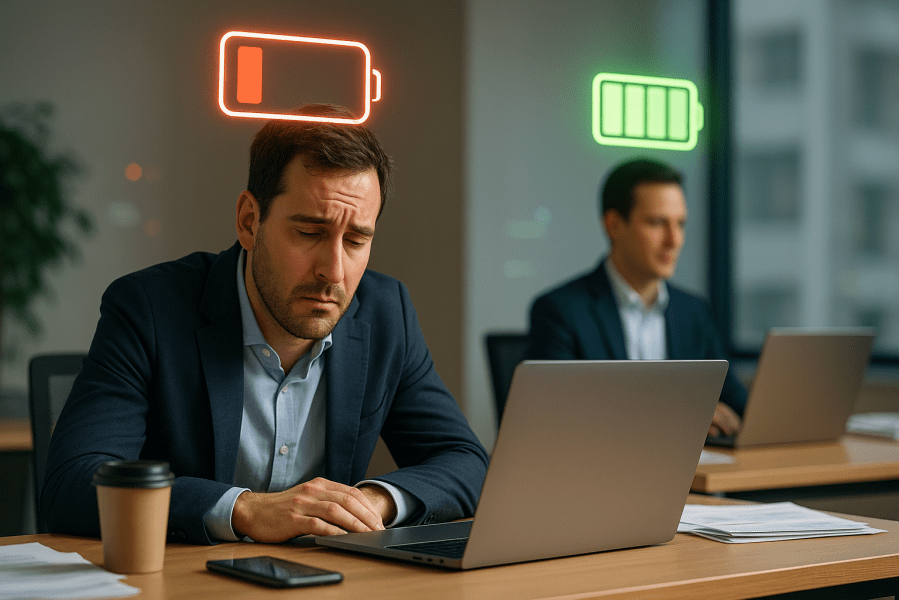
You wake up tired. Coffee doesn’t fix it. Work feels heavier than it should. At night, you’re drained but can’t sleep well. Yet, day after day, you keep pushing.
This is not just “being busy.” It’s not just “stress.” It’s something deeper, more dangerous, and often overlooked: silent burnout.
Unlike sudden breakdowns, silent burnout builds slowly. It creeps in so subtly that you don’t notice it until it has already taken hold. And because it doesn’t always look dramatic, most professionals dismiss it as “normal” or “just part of the job.”
But it’s not normal. And left unchecked, it can cost you your health, your relationships, and even your career.
Why Silent Burnout Is Dangerous
The most deceptive thing about silent burnout is that it masquerades as persistence. From the outside, you’re still functioning. You’re meeting deadlines, attending meetings, and replying to emails. You might even be praised for your “dedication.”
But beneath the surface, cracks are forming:
- You feel tired even after sleeping.
- Focus is harder to sustain.
- Small problems feel overwhelming.
- The joy you once had for your work or hobbies starts to fade.
This kind of burnout doesn’t explode suddenly — it erodes you quietly, day by day.
👉 Actionable takeaway: Watch for early signs: constant fatigue, brain fog, irritability, or a lack of joy in things you once enjoyed. These are signals that your system is overloaded.
The Culture of Always-On Productivity
We live in a world where “busyness” is worn like a badge of honor. Hustle culture glorifies long hours, late nights, and endless sacrifice in the name of success.
Remote work blurred the lines even further. With Slack notifications at 10 PM and emails at midnight, many professionals feel pressure to be “always on.” Even moments of rest are tainted by guilt — that little voice whispering, “You should be working right now.”
But here’s the truth: being constantly busy doesn’t mean being effective. True productivity is not measured in hours worked, but in meaningful outcomes delivered.
👉 Actionable takeaway: Redefine productivity for yourself. Shift the focus from “How many hours did I work?” to “What value did I create today?”
The Cost of Silent Burnout
The hidden price of burnout is enormous.
- Mental health: anxiety, irritability, loss of motivation.
- Physical health: weakened immunity, headaches, insomnia, and even chronic illness.
- Career cost: mistakes increase, creativity dries up, learning slows, and promotions slip away.
And here’s the cruel irony: the very thing you sacrifice your well-being for — career success — is exactly what burnout undermines.
👉 Actionable takeaway: Treat rest as part of your career strategy, not as a luxury. Just as athletes schedule recovery days, professionals must do the same for sustainable performance.
Breaking the Cycle
The good news: burnout is not permanent. You can break the cycle. It starts with small, intentional changes:
- Set Boundaries Define clear start and end times for your workday. Communicate them and stick to them.
- Micro-Rest Take 5–10 minute breaks throughout the day to reset your mind. Walk, stretch, breathe.
- Digital Detox No screens before bed. Give your brain space to wind down.
- Prioritize Recovery Sleep, exercise, and nutrition are not optional — they are your foundation.
- Say No Not every request deserves a yes. Protect your time and energy.
👉 Actionable takeaway: Create one non-negotiable recovery habit — something you protect daily, like 8 hours of sleep, a 30-minute walk, or device-free dinners.
Why Rest Makes You Stronger
Many professionals equate rest with weakness. They believe pushing harder is the only way to achieve more.
But here’s the paradox: rest is what makes you stronger.
- Sleep consolidates memory and learning.
- Breaks restore focus and creativity.
- Downtime fuels resilience.
Think of your brain like a server. If it’s never restarted, memory leaks pile up until the system crashes. Rest isn’t a distraction from success — it’s the very thing that sustains it.
👉 Actionable takeaway: Schedule rest just like you schedule meetings. If it’s not on your calendar, it won’t happen.
Choosing Sustainability Over Survival
Silent burnout is seductive because it feels like persistence. You keep going, even when tired. You push harder, even when depleted. And people admire you for it.
But success built on exhaustion is unsustainable. Eventually, the cracks widen until something breaks.
True strength lies not in pushing until collapse, but in choosing sustainability over survival. The most effective professionals are not the ones who grind endlessly, but the ones who know how to pause, recover, and rise again.
👉 Actionable takeaway: Redefine success to include sustainability. Ask yourself: “Can I keep this pace for the next 5 years without breaking?” If the answer is no, it’s time to adjust.
Final Thoughts
Silent burnout doesn’t come with alarms or explosions. It arrives quietly, disguised as tiredness, hidden behind coffee cups and late-night emails.
But if you listen, you’ll recognize it for what it is: your body and mind asking for balance.
Don’t wait until exhaustion turns into collapse.
Don’t glorify sleepless nights as dedication.
Remember: you can’t build a lasting career — or a fulfilling life — on a foundation of burnout.
The professionals who thrive are not those who run the fastest, but those who know when to stop, breathe, and let their energy rebuild.
Because in the long run, it’s not about how hard you push — it’s about how wisely you recover.

